Bigfoot
| Place of Origin | Primarily sighted throughout the Pacific Northwest (Washington, Oregon, North California) and British Columbia. Various other sightings throughout the forests of North America. |
| Aliases | Bigfoot, Sasquatch, Ape-Men (Terms like Skunk Ape, Yeti, and Abomitable Snowmen usually refer to a different creature.) |
| Appearance | Large, 6ft-10ft tall, hairy, bipedal, apelike features and a muscular build. Commonly described to have a repulsive odor |
| Abilities | Advanced strength, stealth, speed, durability, and bite strength. |
| Relevant Notes | Commonly referenced in pop-culture, most widely known cryptid |
Description:
Bigfoot, or Sasquatch, is one of the most widely known cryptids in human history. Many cryptozoologists have dedicated, and continue to dedicate, their lives to tracking and studying sightings of these supposed “ape-men.” The name “Sasquatch” is an anglicization of “Sasq’ets,” a figure from the traditional legends of the Halq’eméylem-speaking peoples of British Columbia, where it is regarded as a guardian of the forest. The name roughly translates to “hairy man.”
Bigfoot is generally described as a large, hairy biped with ape-like features. True to its name, it is also said to leave oversized, human-like footprints behind. Reports commonly describe it as standing around eight feet tall, and it is generally believed to be non-aggressive unless provoked. Sightings also normally report an unpleasant stench, and screams or whistling sounds.
Prominent Sightings:
Diary of Elkanah Walker (1840)
Walker was a Christian missionary, in Washington state throughout the 1830s and 1840s. He worked in the Tshimakain Mission for 9 years, learning Spokane (Npoqínišcn) and interacting frequently with a small band of local Spokanes led by a chief referred to as Big Head or Cornelius.
Reverand Walker spoke of the local Spokane belief of a race of giants living in the mountains, that travel into the village at night and kidnap people, and steal their fish. They say their footprint is a foot and a half long, and produce a repulsive smell. According to local legend, at night they will whistle three times and throw rocks at houses in the village.
While these stories hold significant contextual information, it is important to distinguish cultural stories and folktale from cryptozoology, and remain respectful of them.
Teddy Roosevelt's Bauman Story (1890)
In Roosevelt's book The Wilderness Hunter, he recounts a story told to him by a trapper by the name of Bauman. In this story, Bauman recalls his time in the Bitterroot Range throughout Idaho and Montana, during the mid 1800's hunting for pelts. They repotedly came across massive, humanoid footprints at their camp, heard odd noises, and smelled a strong unpleasant odor. A couple days after this incident, they returned to their camp to see it had been destroyed. This discovery lead to the finding of more humanoid footprints, and the men heard movement, and moaning from the treeline. In the following days, Baumen then recounts his experience returning to camp and finding one of his fellow men dead at their campsite with his neck snapped, and more tracks in the area. Bauman left the camp after this incident, without turning back.
Ape Canyon Incident (1924)
While searching for gold, a group of four men were reportedly ambushed by ape-men near Mt. St. Helens, Washington, in a canyon now named "Ape Canyon". While camping, the group heard shrill whistling every evening for weeks, seemingly in communication with eachother across the ridges; as well as a thumping sound like that of a gorilla beating it's chest. Two of the men had a run in with one of the ape-men while collecting water, and scared it off with a blast of thier rifle, and that night their cabin was surrounded by at least 3 of these large, hairy ape creatures. The creatures began to throw rocks at the cabin, and call out at eachother. The men opened fire in retaliation, and this back and forth carried on for hours. Fred Beck, one of the men present during the attack, reports that one of the ape-men god close enough to the cabin to reach and arm through the chinking gaps in the log walls and attamept to grab one of their axes, but was shot at and retreated.
The "mountain-devils" as the men called them in their report, retreated by daybreak, and Beck claims to have shot one and send it toppling over the other side of the ridge.
Albert Ostman (1924)
Albert Ostman, a prospector, claims to have been abducted by a family of sasquatch while travelling in British Columbia through the Toba Inlet. In his personal account he was abducted while sleeping, after his camp had been disturbed nightly throughout the past few days.The family take him to a hidden mountain valley,where they hold him prisoner and observe him. According to Ostman, they seemed to primarily eat roots, nuts and spruce/hemlock tips. The sasquatch were tall and covered in hair, with wide jaws and sloping features. Their feet featured a prominent big-toe, possibly for climbing. Within the sasquatch family was an adult male and female, as well asa juvenile boy and girl.
Osman was able to escape by tricking the dominant male into eating a large amount of snuff, allowing him to flee and navigate back to civilization.
Muchalat Harry (1928)
This encounter is a third-hand account told initially by Peter Byrne, a prominent bigfoot researcher. He described a story told to him by Father Anthony Terharr, a missionary priest who frequented the west-coast of Vancouver Island for many years. While Father Terharr was living in Nootka Sound, he knew a Nuu-chah-nulth man by the name of Muchalat Harry who confided in him about his encounter with multiple bigfoot. While Harry was trapping alone near Conuma River, he claimed to have been abducted at night by a large bigfoot, and taken to a group of approximately 20 others. The sasquatch observed him, but did him no harm, however after noticing many bones in their den, Harry took his first opportunity to escape when they were not paying attention. Muchalat Harry travelled 45 miles that night to retun home and nearly died of exposure, needing weeks to recover fully.
Ruby Creek (1946)
Jeannie and George Chapman, parents of 4 living in British Columbia, recounted their experience with a sasquatch to Ivan T. Sanderson, a journalist of True Magazine. Mrs.Chapman claims that after her son came inside around lunch time, he seemed extremely shaken, and mentioned that a cow was "coming down out ofth woods". After investigating, Jeannie saw what at first she assumed to be a bear, but realized it was a large, hairy man coming out of the forest. She called her children in, hiding them under a blanket and fleed to safety. The sasquatch reportedly rummaged through their belongings, and left large footprints, and long hairs that were noticed by George when he returned home that evening. According to the parents the creature returned the following week, at night, making unsettling noises. After this incident the Chapman family abandonned their home and moved elsewhere.
William Roe's Written Affidavit (1955)
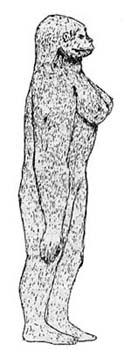
William Roe, a man from Alberta, Edmonton claimed to have encountered a female sasquatch just outside of Tete Jaune Cache, British Columbia. In order to grain credibility for his story, Roe filed a written affadavit, ensuring that he could face legal reprocussions if he was found to be lying.
While climbing Mica Mountain, Roe came face to face with a large, 6ft tall humanoid, covered in hair. Roe described the creature to have a masculine build, but breasts resembling those of a female human. He also describes the arms as exceedingly long, reaching the knees, and the feet to be abnormally large. During this encounter Roe and the creature both notice eachother, after which the female sasquatch reportedly retreaded back into the woods.
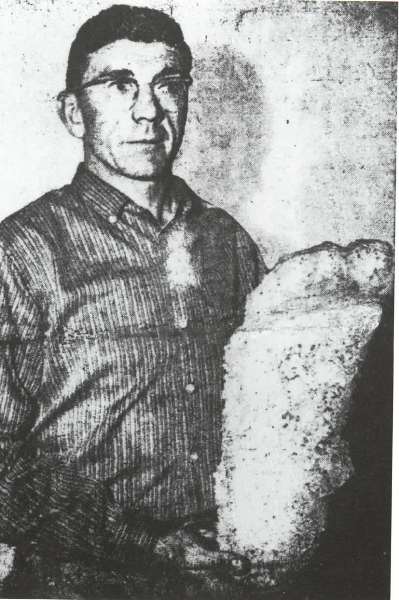
Bluff Creek, Track Casts (1958)
Gerald Crew found large, humanoid tracks in Bluff Creek, California at a road construction site. With plaster and instructions from Bob Titmus, a taxidermist, Crew made casts of these prints and got them photographed, as well as brought to the local newspaper.
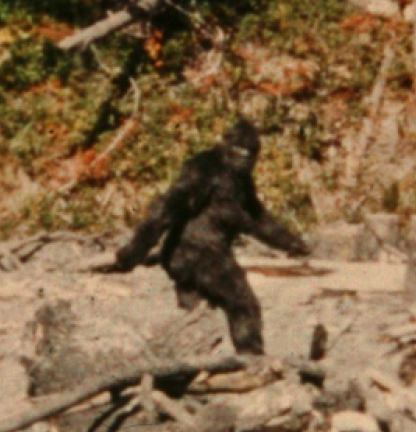
Patterson-Gimlin Film (1967)
The most famous recorded footage of a Sasquatch was captured by Roger Patterson and Bob Gimlin. Patterson was a dedicated Bigfoot researcher and rodeo rider, while Gimlin was an experienced horse handler. Patterson became interested in Bigfoot after reading Ivan T. Sanderson’s 1959 article, “The Strange Story of America’s Abominable Snowman,” in True magazine. He later published his own work, Abominable Snowmen: Legend Come to Life, a survey of Bigfoot-like creatures from around the world. This was followed by a self-published book titled Do Abominable Snowmen of America Really Exist? in 1966.
Patterson and Gimlin initiated a horseback expedition after hearing reports of sightings in Six Rivers National Forest, Northern California. Gimlin was initially skeptical, but agreed that if they encountered a Sasquatch, they would not shoot it. After approximately three weeks of travel, the duo came across a figure crouched by a nearby creek. The figure appeared to be between six and seven feet tall, was covered in silvery-brown hair, and had what looked like female breasts. At this point, Patterson claimed to be about 25 feet away from the Sasquatch (later dubbed “Patty”), and the creature’s movement startled his horse, causing it to rear.
Patterson took roughly 20 seconds to calm his horse and dismount before retrieving his camera from the saddlebag. He told Gimlin to cover him with his rifle as he ran toward the creature and began filming. The creature responded to the commotion by walking away and eventually disappearing into the woods. The entire encounter lasted only a couple of minutes. Gimlin and Patterson attempted to follow “Patty” into the forest, but were unable to locate her again.
The Patterson-Gimlin film has been under extreme scrutiny for decades, and there have meen numerous attempts to debunk it. Despite this, many still belive in it's authenticity.
Click Here to see Stabilized Footage of the Patterson-Gimlin Film on Youtube
Miscellaneous Online Footage
Various footage of different sightings, with little background can be found throughout the internet. It is important to use personal judgement and discretion while viewing footage online.
"Bigfoot: Believers Only - Provo Canyon Thrower Bigfoot??"A. N. Bird (Author & Paranormal Investigator)
"HILL INTERZONE MARBLE MOUNTAIN"Flavien Berger
"Independence Day Bigfoot footage"Deleted Reddit User
"Provo Canyon Bigfoot"Bigfoot Crossroads Podcast
Photographs
Articles & Sources
- No Articles on this Species yet - Check back later
- Bigfoot Encounters - A collection of prominent bigfoot encounter stories from the 1840s to 1950s
- Bigfoot Encounters - A map of sightings in North America by state or province.
- Crypto Mundo - Bigfoot tracks, found and cast in Bluff Creek.
- bigfoot-lives.com - A digitized version of Ivan T. Sanderson's Article "The Strange Story of America's Abominable Snowman"
- Wikipedia - Article detailing the events leading up to the Patterson-Gimlin film.
- BFRO - Article arguing in favor of The Patterson-Gimlin film being authentic.